Orthodontics at Any Age
Orthodontics at Any Age
Orthodontics support teeth that are crooked, crowded, that protrude or affect the way you look. The way your teeth fir together can affect your bite and be more difficult to clean and maintain, to keep them healthy. If you are not satisfied with the way your teeth look, feel or work, orthodontic treatment might help.
Reasons that one might require orthodontics are:
It is vital to treat these issues because teeth are crowded, crooked or protruding can make an individual unsatisfied with their appearance. They might become withdrawn, shy and unwilling to smile because of their teeth.
Teeth that are misaligned also affect a bite. This misalignment can make it hard to chew some foods and may cause some teeth to wear down. It can also cause muscle tension and uncomfortable pain.
Crowded or crooked teeth are more difficult to keep clean. Crowded or crooked teeth are more susceptible to cavities and gum disease. Teeth that stick out are more easily chipped or broken.
Some orthodontic problems should be treated before all the adult (or permanent) teeth come in. The dentist or orthodontist can do a screening to find out if a child will have any orthodontic problems. An orthodontic screening by the age of seven can help a dentist or orthodontist treat or prevent a problem that is developing. This type of screening is called interceptive orthodontics.
Braces
This is the most common used method for orthodontic treatment. Braces have four parts: the bracket or band (the metal ring) that is attached to each tooth; the cement or bonding material that attaches the bracket or band to each tooth; the arch wire that fits into all the brackets; and elastics or wire ties that hold the wire into the bracket or band.
Generally speaking, brackets, bands and arch wires are made of metal, but brackets and elastics can also be clear, tooth coloured or multi-coloured. The dentist or orthodontist might suggest other treatments before, during or after braces are put on the teeth.
Headgear
Another method of orthodontics is headgear; it is used to guide the direction of tooth movement and/or jaw growth in someone who is still growing. Headgear might be worn before braces are applied or during any part of the orthodontic treatment. There are several types of headgear. The patient typically inserts the headgear and wears it during the evening and at night. The orthodontist or dentist will instruct and demonstrate on how to insert and use the headgear and advises on the length of use for each day.
Removal Appliances
Removal appliances are not quite like braces but they can move a tooth or a group of teeth and are fitted by the dentist or orthodontist. They might be worn before braces are put on, while braces are on, or on their own to treat a specific orthodontic issue.
Retainers
Retainers help keep the teeth in the right place once braces have been removed. Retainers are attached to the teeth or they might be removable. The orthodontist or dentist will advise a patient if they have to wear the retainer all the time or parts of each day.
Oral Surgery
Sometimes, it is necessary to experience having a tooth removal to reposition crowded teeth or misplaced teeth. Jaw surgery (or orthognathic surgery) might be required when there are major differences in the size of the position of the upper and lower jaw. It helps the upper and lower jaw line up. If the orthodontist thinks jaw surgery is needed, they will most likely refer you to an oral and maxillofacial surgeon.
Your Next Smile
Starts Right Here.
Reach out to our Brampton concierge team to schedule your visit — new patients, transfers, and CDCP coverage all welcome.
Explore Other Dental Education Concepts
Bonding & Veneers
Two proven, non-surgical ways to restore a complete, functional smile.
Learn More arrow_forward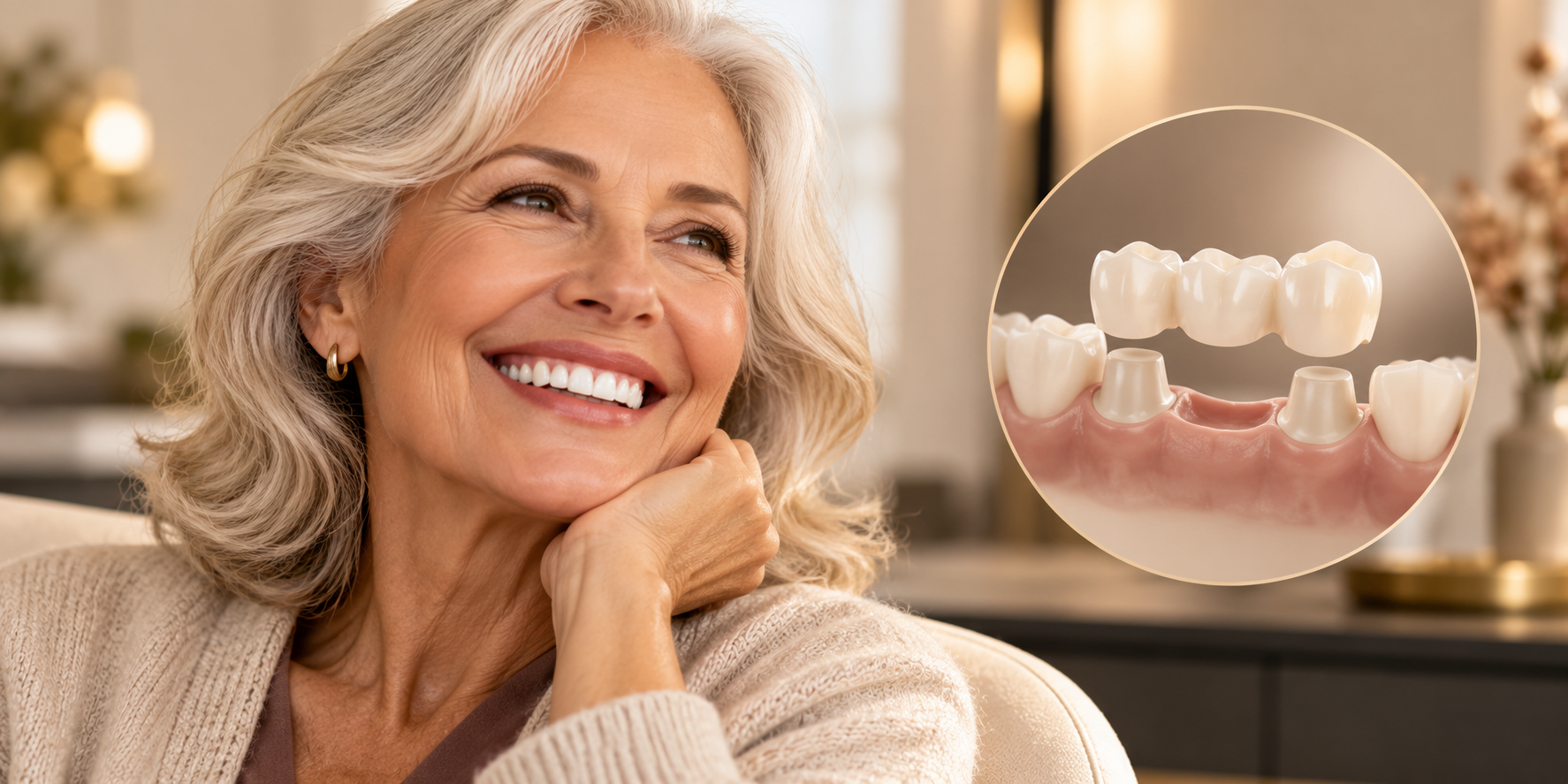
Bridges & Dentures Replacing Missing Teeth
Two proven, non-surgical ways to restore a complete, functional smile.
Learn More arrow_forward
Care After Minor Oral Surgery
What to expect — and how to recover comfortably — after an extraction or similar procedure.
Learn More arrow_forward
Caring for Your Teeth & Gums
The daily habits that keep your whole mouth healthy, not just your teeth.
Learn More arrow_forward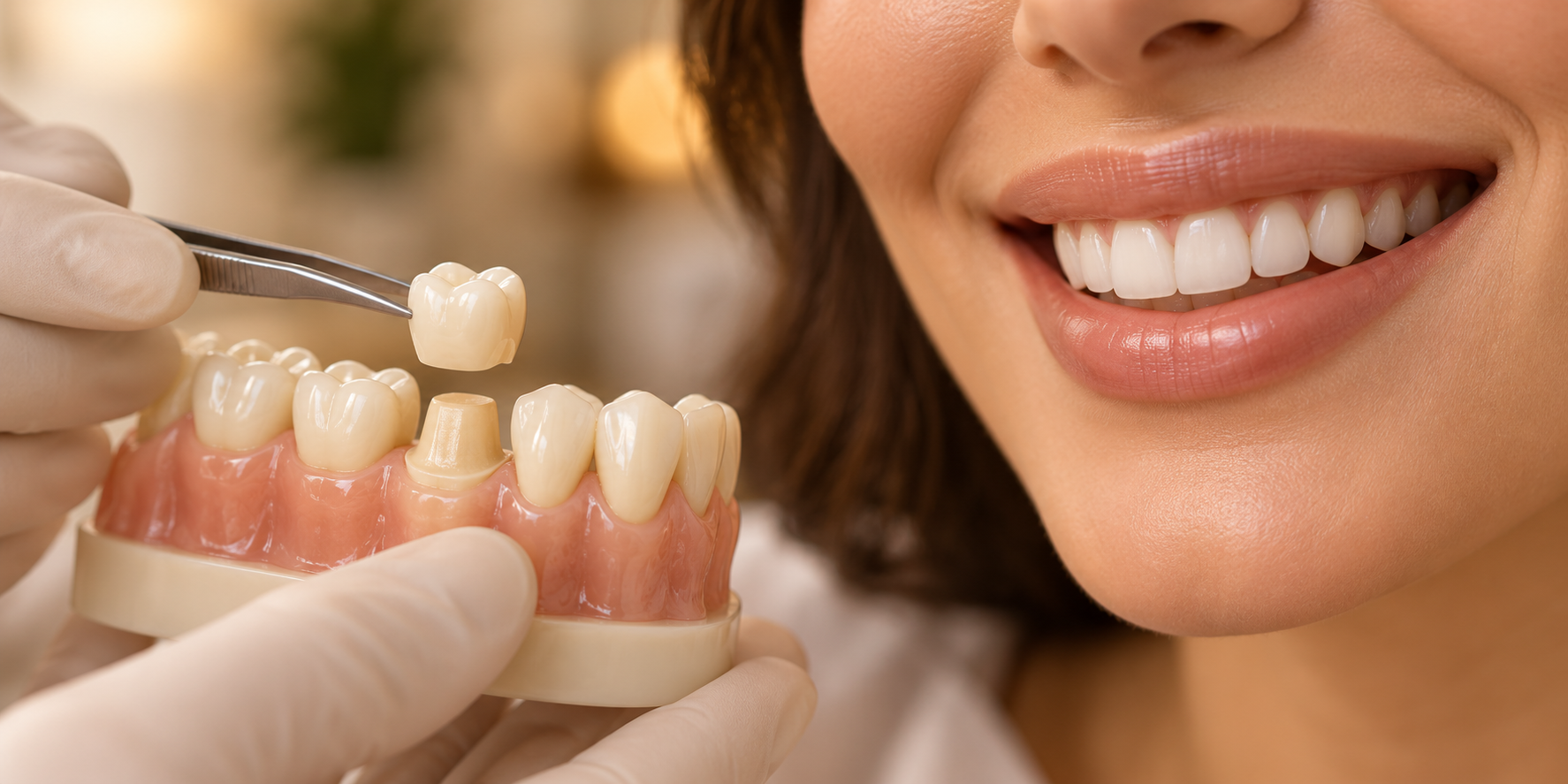
Crowns Restoring Damaged Teeth
How a custom cap brings a cracked, worn, or heavily filled tooth back to full strength.
Learn More arrow_forward
Dental Implants Replacing Missing Teeth
How a titanium root replacement gives you back a permanent, natural-feeling tooth.
Learn More arrow_forward
Dental Safety & Emergencies
Knowing what to do in the first few minutes of a dental emergency can save a tooth.
Learn More arrow_forward
Good Dental X-rays
Why digital X-rays are a safe, essential tool for catching problems you can't see.
Learn More arrow_forward
Should I get a Dental Checkup?
Why a routine checkup matters even when nothing seems wrong.
Learn More arrow_forward
Food & Children's Oral Health
How everyday diet choices shape a child's long-term dental health.
Learn More arrow_forward
Gum Disease Preventing Tooth Loss
Catching gum disease early is the key to protecting the teeth it threatens.
Learn More arrow_forward
Hidden Threats to Your Oral Health
Everyday habits and conditions that quietly damage your teeth without obvious warning signs.
Learn More arrow_forward
Orthodontics at Any Age
Straightening your teeth isn't just for teens — adult orthodontics is more common, and more discreet, than ever.
Learn More arrow_forward
Root Canal Treatment
Demystifying one of dentistry's most misunderstood — and most tooth-saving — procedures.
Learn More arrow_forward
Seniors & Oral Health
The unique oral health considerations that come with age — and how to stay ahead of them.
Learn More arrow_forward
TMD (Temporomandibular Joint Disorder)
Understanding the jaw joint condition behind frequent headaches, clicking, or jaw pain.
Learn More arrow_forward